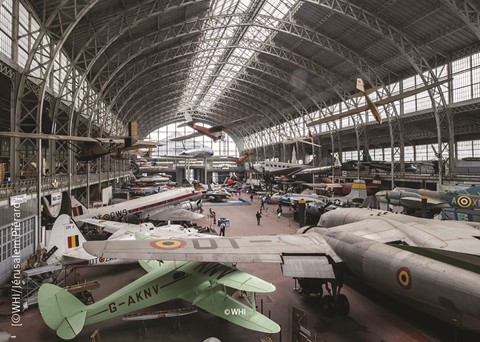
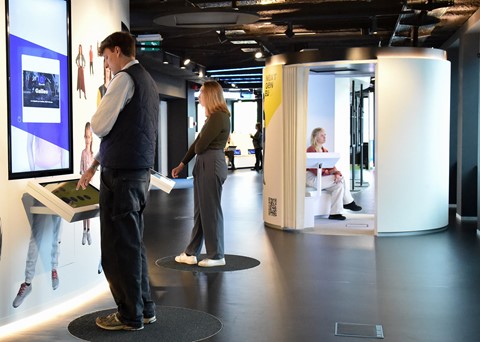
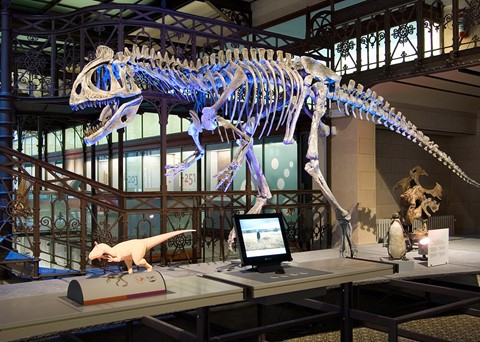
A visit to the Art & History Museum is ideal for those who like travelling without leaving the city, taking the time to understand the world and being surprised by the richness of civilisations. An experience to enjoy fully, during a cultural getaway in Brussels, alone, as a couple or with family, for the pleasure of discovery and an open mind.
Art & History Museum (MRAH) – A fascinating journey through civilizations and styles
The Art & History Museum, nestled in the heart of Cinquantenaire Park in Brussels, is one of those places where time seems to stretch, overlap and converse. From the very first rooms, visitors are invited to trace the thread of humanity, from its earliest origins to the creative impulses of the early twentieth century. Here, every object tells a story, every gallery opens a window onto a civilization, a craft, a vision of the world.
Far from a static visit, the experience unfolds as a continuous exploration, rich and stimulating, where archaeology, art and history interact with elegance. Just minutes from the centre of Brussels, the MRAH offers a cultural immersion of remarkable depth, capable of captivating both art enthusiasts and curious visitors, whether exploring with family or on their own.
From the origins of humanity to the great ancient civilizations
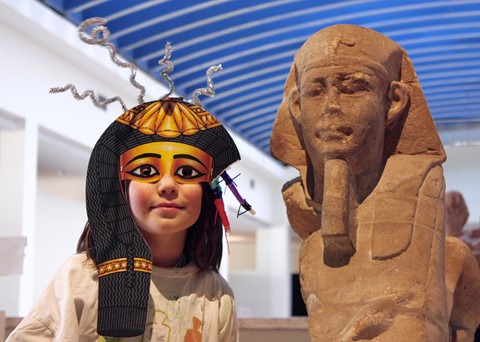
The journey begins far back in time. The archaeological collections lead you to the very origins of humanity, before immersing you in the great founding civilizations. Ancient Egypt continues to fascinate: the mummies, steeped in mystery, inspire silence and contemplation. A little further on, Greece and Rome reveal their sense of balance, power and organization of the world.
The monumental model of Rome inevitably draws attention. Visitors linger over it, searching for details and imagining the vibrant life of the ancient city. The spectacular Apamea mosaic, for its part, impresses with its finesse and scale, reminding us how decorative art was already a universal language.
A dialogue between continents and cultures
What stands out at the Art & History Museum is its ability to create a dialogue between cultures. Belgian and European collections stand alongside those from North America, South America and Asia, presented in a fluid and thoughtful perspective. The eye moves naturally from one to another, encouraging comparisons, awakening curiosity and the desire to understand.
Among the emblematic pieces, the great moai of Easter Island commands attention with its silent and magnetic presence. A powerful testimony to a distant civilization, it alone embodies the museum’s universal spirit. Pre-Columbian art, with its symbolic forms and carefully crafted materials, completes this global panorama, reminding us that human creativity expresses itself everywhere, in infinitely varied forms.
Art Nouveau and Art Deco: elegance as a legacy
The visit continues into more recent periods, with a particular focus on Art Nouveau and Art Deco, beautifully showcased in the new galleries. Brussels tapestries, decorative objects and furniture testify to an exceptional refinement, deeply rooted in the artistic history of Brussels and Belgium.
The Victor Horta Wolfers room is a highlight of the visit. It embodies the transition to modernity, where art enters everyday life with boldness and elegance. The lines, materials and details tell the story of an era of intense creative energy, at the crossroads between tradition and innovation.
Visitors often find themselves slowing down, observing the light playing across surfaces and enjoying the simple pleasure of thoughtfully crafted beauty. The museum then becomes a place to pause, ideal for wandering and quiet wonder.
Dans le parc du Cinquantenaire se trouve un petit bâtiment ressemblant à un temple grec. Pour le jeune Victor Horta, ce pavillon fut sa première commande publique. La conception, qui intègre des éléments de typologie grecque, montre également les prémices de l’Art nouveau, visibles dans les détails. À l’intérieur se trouve le relief monumental "Les Passions humaines" de Jef Lambeaux. Cette œuvre impressionnante (11 mètres de long sur 6 mètres de haut) en marbre de Carrare représente les plaisirs et les souffrances de l’humanité.
Depuis 1898, le petit temple néoclassique de Victor Horta et le relief de Jef Lambeaux sont inextricablement liés. La relation tumultueuse entre les deux artistes, le nu sensuellement sinueux, et le bâtiment souvent fermé en raison de son état précaire ont contribué à l’histoire, au 'scandale' et au mystère autour du pavillon. Après une restauration approfondie en 2019, le pavillon a retrouvé sa grandeur d’avant la longue fermeture.
In het Jubelpark staat een gebouwtje met de uitstraling van een Grieks tempeltje. Voor de jonge Victor Horta was dit paviljoen zijn eerste overheidsopdracht. Het ontwerp, dat Griekse elementen bevat, vertoont ook de beginselen van de art nouveau, zichtbaar in de details. Binnenin bevindt zich het monumentale reliëf De menselijke driften van Jef Lambeaux. Dit indrukwekkende kunstwerk (11 meter lang en 6 meter hoog) in Carrara-marmer beeldt de genoegens en het leed van de mensheid uit.
Sinds 1898 zijn het neoklassieke tempeltje van Victor Horta en het reliëf van Jef Lambeaux onlosmakelijk met elkaar verbonden. De gespannen relatie tussen beide kunstenaars, het sensueel kronkelende naakt, en het vanwege zijn precaire toestand vaak gesloten gebouw hebben bijgedragen aan het verhaal, 'schandaal' en mysterie rond het paviljoen. Na een grondige restauratie in 2019 hervond het paviljoen zijn oorspronkelijk grandeur.
In the Parc du Cinquantenaire stands a small building with the appearance of a Greek temple. For the young Victor Horta, this pavilion was his first public commission. The design, which incorporates Greek elements, also shows the early signs of Art Nouveau, visible in the details. Inside, it houses the monumental relief The Human Passions by Jef Lambeaux. This impressive artwork (11 metres long and 6 metres high) in Carrara marble depicts the pleasures and sorrows of humanity.
Since 1898, Victor Horta's neoclassical temple and Jef Lambeaux's relief have been inextricably linked. The tense relationship between the two artists, the sensually winding nude figures, and the building, often closed due to its precarious condition, have all contributed to the story, 'scandal', and mystery surrounding the pavilion. Following an extensive restoration in 2019, the pavilion regained its initial grandeur.
With nearly 250 artworks on display, this exhibition offers the European public a rare opportunity to discover contemporary Inuit art. Moving beyond an ethnographic approach, the exhibited works are first and foremost those of artists whose creations engage with the major challenges of our time and with
the authentic voices of the Inuit communities of Nunavut and Nunavik.
Using prints, drawings and sculptures, these artists explore the human-animal relationship, along with concepts such as memory, identity and the transformation of landscapes and territories.
Inspired by the collection assembled by the Belgian poet Carl Norac, with additional contributions from several major European museums, the exhibition highlights the rich variety of materials and the diversity of artistic techniques.
The people of the Far North, the Inuit, are true artists! Artists capture what they hear, see, feel, discover or remember from the past. In this way, stories about heroes and animals come to life on paper, stone and textiles.
During Kids' Arts Day, come and wander about in the exhibition Inuit, Impressions from the Far North. Then drop by the Inuit Art Studio and have fun trying out some techniques yourself. Today, you’re the great artist!
PROGRAMME
Drop-in workshops – throughout the day -
- Graphic Arts Studio!
Stamping, making collages, stenciling or engraving? Try one technique — or all of them! Messy fingers guaranteed!
- Textile Studio!
The Inuit create beautiful wall hangings from felt. Take inspiration from their work and get creative yourself!
- Sculpture Studio!
Dancing bears and adorable little seals… Inuit sculptors really know their stuff! Now it’s your turn!
At set times -
- Storytelling tour of the Inuit exhibition
Follow the guide and discover the stories behind the artworks! For families with children aged 6 and up. Duration: 20 minutes. Sign up on the day at the event welcome desk.
Need a break? At the crèche café, the youngest visitors can play and read to their heart’s content.
The programme is subject to change.