
House of European History
The House of European History takes visitors on a journey along the path of Europe’s history and challenges them to contemplate its future.
Entrance is free, with audio-guides in the 24 official languages of the European Union.
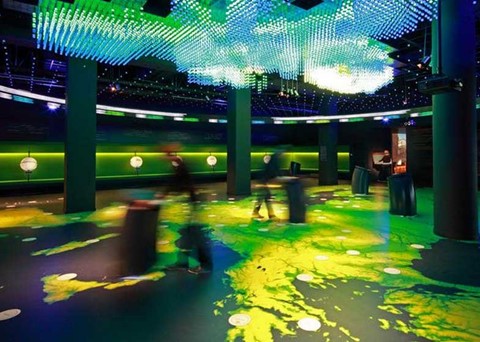
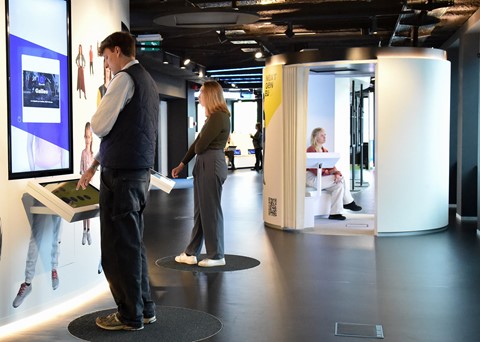
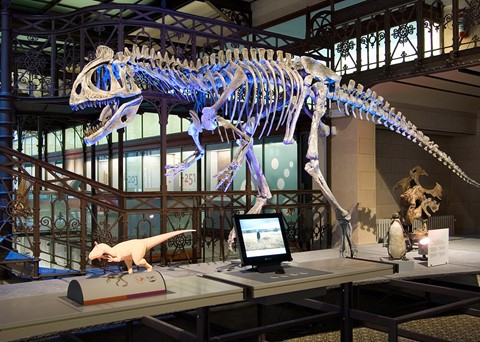
At the heart of the House of European History, the permanent exhibition galleries use objects, reconstructions and multimedia resources to take visitors on a thought-provoking narrative that focuses on the continent’s 19th and 20th centuries.
The museum regularly hosts temporary exhibitions.
For example, exploring the issue of waste in Europe, disinformation or artwork during wartime. Discover the current temporary exhibition on the website.
Teachers and Students
Learning aids and resources are available both on-site and online. Onsite, the museum offers workshops, guided and self-guided tours for primary and secondary school students. Online, teachers and students can use free digital resources for the history and civics classroom, either as a preparation to visit the House of European History or as a classroom activity.
Families
From museum trails to hands-on spaces and family events, you can arrange a fun day of discovery and connection for the whole family at the House of European History.
A trail created in the style of a newspaper makes young visitors aged 8 to 12 step into the shoes of a spy. The trail is available in four languages (Dutch, French, English, German) during the museum opening hours.
The museum is family-friendly, with baby-changing facilities and access for buggies. Parents may feel certain aspects of the permanent exhibition are only suitable for children over eleven years old.
Entrance is free, with audio-guides in the 24 official languages of the European Union.
At the heart of the House of European History, the permanent exhibition galleries use objects, reconstructions and multimedia resources to take visitors on a thought-provoking narrative that focuses on the continent’s 19th and 20th centuries.
The museum regularly hosts temporary exhibitions.
For example, exploring the issue of waste in Europe, disinformation or artwork during wartime. Discover the current temporary exhibition on the website.
Teachers and Students
Learning aids and resources are available both on-site and online. Onsite, the museum offers workshops, guided and self-guided tours for primary and secondary school students. Online, teachers and students can use free digital resources for the history and civics classroom, either as a preparation to visit the House of European History or as a classroom activity.
Families
From museum trails to hands-on spaces and family events, you can arrange a fun day of discovery and connection for the whole family at the House of European History.
A trail created in the style of a newspaper makes young visitors aged 8 to 12 step into the shoes of a spy. The trail is available in four languages (Dutch, French, English, German) during the museum opening hours.
The museum is family-friendly, with baby-changing facilities and access for buggies. Parents may feel certain aspects of the permanent exhibition are only suitable for children over eleven years old.

- Monday : -
- Tuesday : -
- Wednesday : -
- Thursday : -
- Friday : -
- Saturday : -
- Sunday : -
- T. +32 2 283 12 20
- Rue Belliard 135 Belliardstraat - 1000 Brussels
- www.historia.europa.eu
- historia@europarl.europa.eu

Each tour is facilitated by a member of our museum team, offering their personal interpretation of the theme and a fresh perspective on the collection. Rather than exhaustive lectures, these tours highlight selected objects and aim to spark curiosity, reflection and conversation about European History. Practical information - Tours are free and take place from 12:15-13:00 in English. Meet the guide at the Family Kiosk in the Fables Room. No booking required. - Please be aware that to enter the museum, you must pass through security checks which can take some time – we advise you plan for this in advance. 20 January - Memories of the Shoah 2026 marks 80 years since the closure of the Nuremberg Trials, where Nazi perpetrators were brought to justice. The month of January also offers a time to commemorate the victims of the Holocaust on Remembrance Day. A week prior to the commemoration, the House of European History invites you to take time in the exhibition to remember the victims and hear the individual stories that must never be forgotten. 17 February - Feelings in History Feelings play a large part in historical narratives: sometimes for contradicting reasons, sometimes driving individuals or entire societies to take action. This February, come and uncover some of the many emotions behind historical events through the vast collection of the House of European History. 17 March - Women in European History In March we celebrate International Women’s Rights Day, making it the perfect moment to discover some of the extraordinary women represented in the House of European History. Delve into the collection, encounter the objects linked to their lives, and learn more about their impact on Europe’s past. 21 April - Meet Postcolonial? exhibition team 1/2 Our new temporary exhibition “Postcolonial?” has officially opened its doors! Come and meet the team that helped create and shape the exhibition that explores the long-lasting effects that colonisation and its ending have had in Europe over the last 70 years. 19 May - A little more EU in your lunch break EU don't know EU’re bEUtiful! Discover more about the European Union and the people, programmes and events that connect European countries. “Schuman”, “European Elections” and “Erasmus” this is your chance to learn more about these iconic European stories! 16 June - Love is Love Love makes the world go round and the House of European History holds many lovely objects and stories. Come and encounter them as you fall in love with history and take a closer look at some stories from the LGBTQIA+ community, their struggle to love who they want, their victories and the waves they made in European history. Love wins! 21 July - No lunchtime tour due to national holiday. 18 August - Europe in motion Behind every journey lies a story. This month, take a closer look at the movements that transformed Europe: the migrations that reshaped communities, the travels that opened new horizons, and the transport innovations that brought the continent closer together. Let’s uncover the human experiences hidden behind Europe’s roads, routes and roaming. 15 September - Generation to generation Which generation do you belong to? From Erasmus students setting off on European adventures, to the many age groups who lived, loved, fought and rebuilt this continent, each generation brings its own rhythm to history. Come and uncover how generations shape Europe and how Europe shapes generations. 20 October - A very European playlist Music in European history carries meaning, memories and moments of gathering. Let’s listen carefully to the sounds and songs throughout the House of European History including ‘’Ode to Joy’’, factory rhythms, Eurodance beats and Eurovision favourites... 17 November - Meet Postcolonial? exhibition team 2/2 “Postcolonial?” is the current temporary exhibition here at the House of European History. It explores the long-lasting effects that colonisation and its ending have had in Europe over the last 70 years. Come and meet the team that shaped this exhibition. 15 December - Preparation for a festive season Say hello to the festive season! Brush up on stories of European history for the perfect dinner table conversation this holiday period. Looking for inspiration for the perfect gift? Try a trip to the House of European History! Let’s unpack the history of certain objects that were given and maybe even returned.

Get to know the museum’s essentials Once a month, join our French-language guided tour designed for individual visitors who want an engaging introduction to the permanent exhibition. In 90 minutes, you will discover essential objects and stories while learning new ways to look, reflect and discuss European history. The tour is completely free and open to adults and teenagers aged over 12. It is ideal for curious visitors coming on their own, or with up to four other people. About the Visites Découvertes - During this guided visit, a facilitator will introduce you to the museum and a selection of key objects from the exhibition. - The tour also involves learning methods, such as "Visible Thinking" and "Slow Looking", which encourage sharing observations or moments for dialogue and reflection within the group. - The tour will help you see details from European history, connect ideas and feel more confident exploring the rest of the exhibition on your own afterwards. Practical Information - Language - French - Duration - from 14:30 to 16:00, each second Sunday of the month - Meeting point - Fables room, arrive in advance due to mandatory security checks - Registration - Participation is free, but registration is mandatory. If the tour is not full, additional visitors may join on the day.

-
Opening times
18/04/2026 - 14/03/2027: * monday: from 13:00 to 18:00 * tuesday, wednesday, thursday and friday: from 09:00 to 18:00 * saturday and sunday: from 10:00 to 18:00
Starting with the structural foundations of European colonialism, going through how Europeans preserved power as their empires collapsed and in what manner that affected newly independent countries, the exhibition takes us to present times. It invites us to reflect on the ways colonial history still shapes life today. Following the Second World War, colonial power seemed to crumble. From 1945 to the end of the twentieth century, more than 80 colonies overcame European rule and declared independence. After decades or even centuries of resistance to brutal oppression, their victories appeared to mark a decisive break with the past. But appearances can be deceiving. How did the colonial matrix of power – the ideas, events, inequalities and injustices born of colonialism – continue to shape the modern world? Unique artworks, historical objects and personal stories accompany the visitor throughout this much-needed European reckoning with colonialism.